
INTRODUCTION
In today’s competitive business landscape, a brand’s visual identity is essential in creating a memorable and lasting impression. One of the most effective ways to communicate and reinforce this identity is through signage. Whether it’s outdoor, indoor, or digital, well-designed signage can act as a powerful branding tool that captures attention, conveys your brand message, and strengthens customer loyalty.
THE POWER OF SIGNAGE IN BRANDING
Signage goes beyond just being a directional or informational tool—it plays an integral role in creating a cohesive brand experience. Here’s how signage influences branding:
1. First Impressions Matter
Your signage is often the first interaction a potential customer has with your brand. It serves as the initial point of contact, setting the tone for what people can expect from your business. For example, sleek, modern signage can convey professionalism and innovation, while playful or artistic signage can evoke creativity or a more casual vibe. A clear, consistent design helps to ensure that the first impression reflects your brand values accurately.
2. Reinforcing Branding Identity
Consistent use of colors, typography, and logo across your signage ties directly to your overall brand identity. Visual consistency helps to strengthen brand recognition, ensuring that your audience easily identifies your business across different platforms. For example, Starbucks uses its iconic green logo and font on every piece of signage, reinforcing its global identity. Over time, these visual elements become synonymous with your brand.
3. Differentiation from Competitors
In a crowded marketplace, unique and distinctive signage can set your business apart from competitors. Custom-designed signs that highlight your brand’s unique personality can be a key differentiator. Think about the golden arches of McDonald’s or the distinctive apple symbol of Apple Inc. These signage examples are so iconic that they instantly signal the brand, without needing any additional explanation.
4. Emotional Connection with Customers
Effective signage can evoke emotions that resonate with your target audience. This emotional connection strengthens brand loyalty and encourages repeat business. Signage that incorporates storytelling elements or reflects the values of your customers—such as sustainability or innovation—can help create a deeper bond between your brand and its audience.
EXAMPLES OF SUCCESSFUL BRANDING THROUGH SIGNAGE
1. Waitrose & Partners
Waitrose & Partners is known for its elegant and clean visual identity, reflected in its signage. The brand consistently uses its signature green color palette and distinctive typeface across all store signage, which conveys a sense of premium quality and trustworthiness. The inclusion of “Partners” in the brand’s name is a subtle reinforcement of its employee-owned structure, creating a connection with ethical business practices. Their signage evokes reliability and a high standard of service, strengthening the brand’s positioning in the premium grocery market.

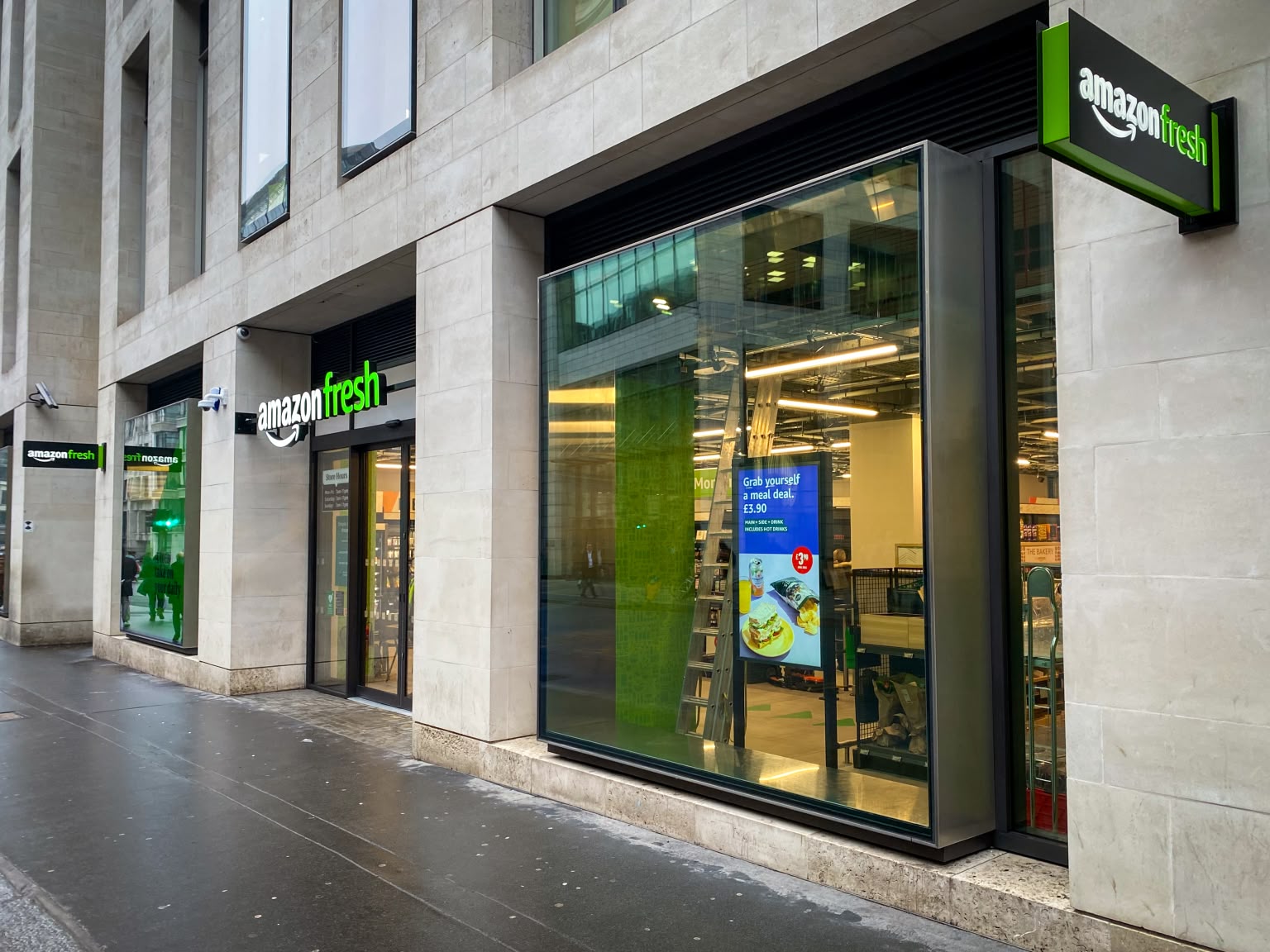
2. Amazon Fresh
Amazon Fresh’s signage is a prime example of a brand that uses modern, sleek design to reflect innovation and convenience. The bright green color associated with the brand reinforces the fresh, healthy focus of its grocery stores, while the simple sans-serif font ensures clarity and modernity. Digital signage plays a key role in Amazon Fresh locations, enhancing the brand’s tech-forward identity and providing an immersive, efficient shopping experience. This consistent use of futuristic, minimalist signage strengthens the perception of Amazon Fresh as a pioneer in tech-driven retail.
These brands demonstrate how effective signage can visually communicate a brand’s values, promise, and identity, leaving a lasting impact on customers.
BEST PRACTICES FOR CREATING EFFECTIVE BRANDING SIGNAGE
If you want your signage to successfully build and reinforce your brand’s visual identity, keep the following tips in mind:
- Keep it Simple: Overly complex signage can confuse potential customers. Stick to a clean, simple design that clearly communicates your brand message.
- Consistency is Key: Use the same colors, fonts, and logos across all your signage to maintain a consistent brand identity.
- Choose the Right Materials: Whether it’s metal, wood, plastic, or digital, the materials you choose for your signage should reflect the quality and personality of your brand.
- Location Matters: Make sure your signage is placed in high-traffic, visible areas where it can attract the most attention.
CONCLUSION
Signage is more than just a way to direct or inform—it’s a crucial tool for building a strong visual identity and connecting with your audience. Well-designed and strategically placed signage can help establish a brand’s presence, differentiate it from competitors, and foster long-term relationships with customers. When done right, signage is a powerful, cost-effective way to enhance your brand and leave a lasting impression.